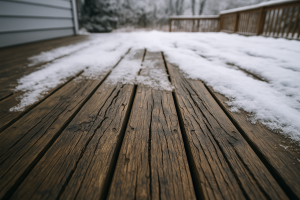
Winter creates a beautiful backdrop, but it also brings snow and ice that can quickly become hazardous if they are left to accumulate on your deck. Proper winter maintenance protects the surface, prevents slips, and keeps your outdoor space in top shape until warmer weather returns. With the right tools and techniques, clearing snow and ice becomes simple, safe, and effective for all deck types, including composite and PVC.
Choosing the Right Tools
Using the proper tools is the most important part of winter deck care. Metal shovels or sharp-edged tools can scratch or gouge the surface, especially on composite and PVC decking. A plastic shovel with a flat blade is the safest option for removing heavy snow without causing damage. For light snow, a soft bristle broom works well, and a leaf blower is ideal for powdery accumulation during quick cleanups.
When shoveling, always push the snow in the same direction as the deck boards. Moving snow parallel to the grain helps prevent accidental scraping along the edges of the boards. Take your time, work gently, and avoid aggressive scraping, which can cause unnecessary wear.

Removing Snow Safely
The best time to remove snow is as soon as possible after it falls. Fresh snow is lighter, easier to clear, and far less likely to freeze into a thick layer of ice. For light accumulation, a broom or blower will often do the trick. For deeper snow, gently push it off the deck using a plastic shovel. Remove it in smaller sections rather than trying to lift heavy piles, which can cause accidental scraping.
If your deck sits below an overhang, consider clearing the roof edge with a snow rake. This prevents sudden falls of packed snow or ice that could damage the deck or create safety hazards.
A snow blower can be used on decking when operated with care. Keep the machine slightly raised so that no metal components can touch the surface, and guide it with smooth, controlled movements.
Salt and Ice Melt Guidelines
Choosing the right ice melt product is one of the most important parts of winter deck protection. Not all salts are safe for decking, and the wrong choice can lead to discoloration or surface damage.
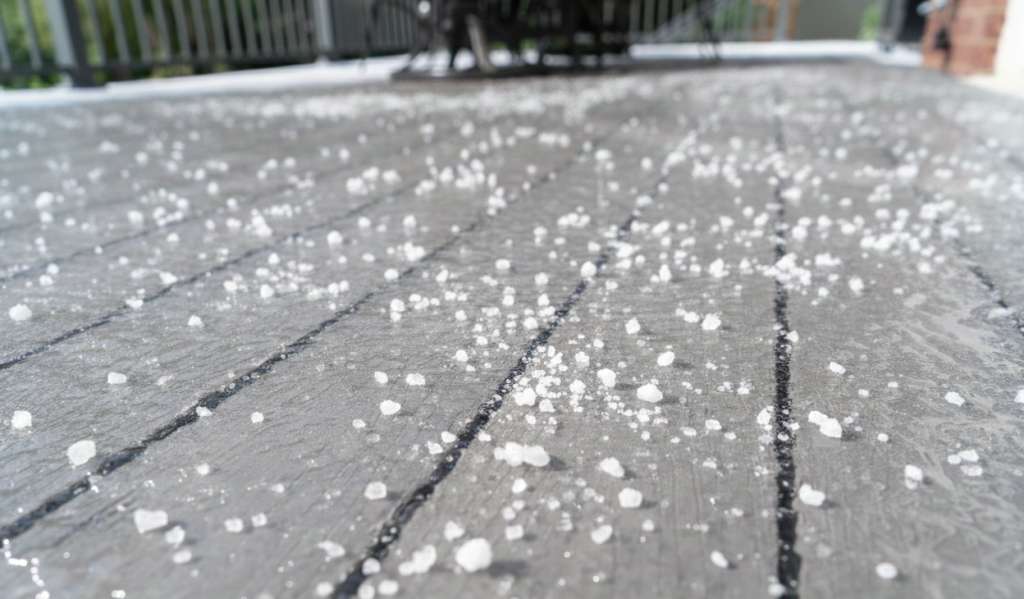
For composite and PVC decking, calcium chloride or magnesium chloride-based ice melts are the preferred options. These formulas effectively melt ice while remaining much gentler on deck surfaces. Traditional rock salt should be avoided unless it is specifically labeled as safe for use on composite and PVC materials.
Ice melt products that contain dyes or colorants should never be used. These additives can stain the surface of your deck as the ice melts. Regardless of the type of melt you use, always remove any leftover granules once the ice has loosened. Rinse the area with clean water or mild soap to prevent residue from drying on the boards.
Sand is not recommended for traction on composite or PVC decking. Sand particles can scratch the surface and become embedded in the texture of the boards, creating long term wear that is difficult to remove.
Handling Ice Buildup
Even with consistent snow removal, ice can still develop during winter temperature swings. Thin ice can often be lifted or loosened with a plastic scraper. Always avoid aggressive chipping or prying that could damage the boards.
For thicker ice, apply a deck safe ice melt in a light, even layer. Allow time for the product to soften the ice, then clear the area gently. Once melted, rinse away any leftover material to keep the surface clean and prevent staining.
Protecting Your Deck Between Snowfalls
Covers and protective mats can significantly reduce the amount of snow that reaches your deck. If you do not plan to use the deck frequently during winter, covering it will reduce maintenance and keep the boards looking clean. Heated mats designed for outdoor use can also help prevent ice from forming in high traffic areas. Always ensure that heating products are compatible with your decking material.
Composite and PVC systems benefit most from routine cleaning and proper snow removal habits. Systems like Dexerdry used under Clubhouse PVC boards can also help divert meltwater away from the space below.
Staying Consistent With Winter Maintenance
A quick inspection every few days can help catch early signs of winter damage. Look for areas where snow compacts into ice, spots where water collects, or signs of staining. Keeping the surface clean and dry reduces the chance of mold or mildew forming and helps maintain the appearance of the decking throughout the season.
For more detailed care recommendations, you can also reference our Care and Maintenance Guide for best practices throughout the year.
Winter deck care does not need to be difficult. With a few smart precautions and consistent habits, you can protect your deck, reduce the risk of damage, and keep your outdoor space safe and usable all season.
Discover the Difference
Experience the difference of a deck built for real North American weather.
Order your TruNorth Samples or Find a Retailer and see how our fully capped, wood-free composite decking keeps your outdoor space beautiful season after season.