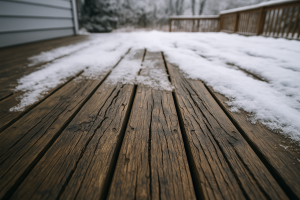
As winter starts to fade and the spring equinox gets closer, most homeowners are ready to get back outside. Before patio season officially begins, it is worth taking a little time to get your deck back in shape after months of snow, ice, and freezing temperatures.
Composite decking and PVC decking are built to handle tough Canadian weather, but like any outdoor surface, they still benefit from a proper spring refresh. The good news is that getting your deck ready does not take much effort if you follow the right approach.
Start with a quick look around
The first thing to do is simply walk your deck and take it in. Winter can leave behind more than just dirt. Look for debris between boards, areas where water may be sitting, or anything that could be blocking airflow underneath.
Drainage and ventilation matter more than most people think. Making sure water is directed away from the deck and that there is space for air to move underneath helps prevent long term moisture issues and keeps your deck performing the way it should.
If you have planters, furniture, or anything sitting directly on the boards, it is a good idea to lift or reposition them. Trapped moisture is one of the easiest ways for surface stains to develop over time.

Winter always leaves something behind
Even on a low maintenance deck, winter tends to leave behind a layer of debris. Leaves, dirt, and even leftover ice melt can collect between boards and along the surface.
Clearing this off is simple but important. A broom or leaf blower works well to clean the surface and open up the gaps between boards. Keeping those gaps clear allows water to drain properly and helps prevent buildup that can lead to staining or mildew.
If any salt or ice melt residue is still sitting on the deck, make sure it gets rinsed off. It is a small step that can make a big difference in keeping your boards looking clean.
Cleaning your deck does not need to be complicated
One of the biggest advantages of composite decking and PVC decking is how easy they are to clean. You do not need harsh chemicals or complicated tools.
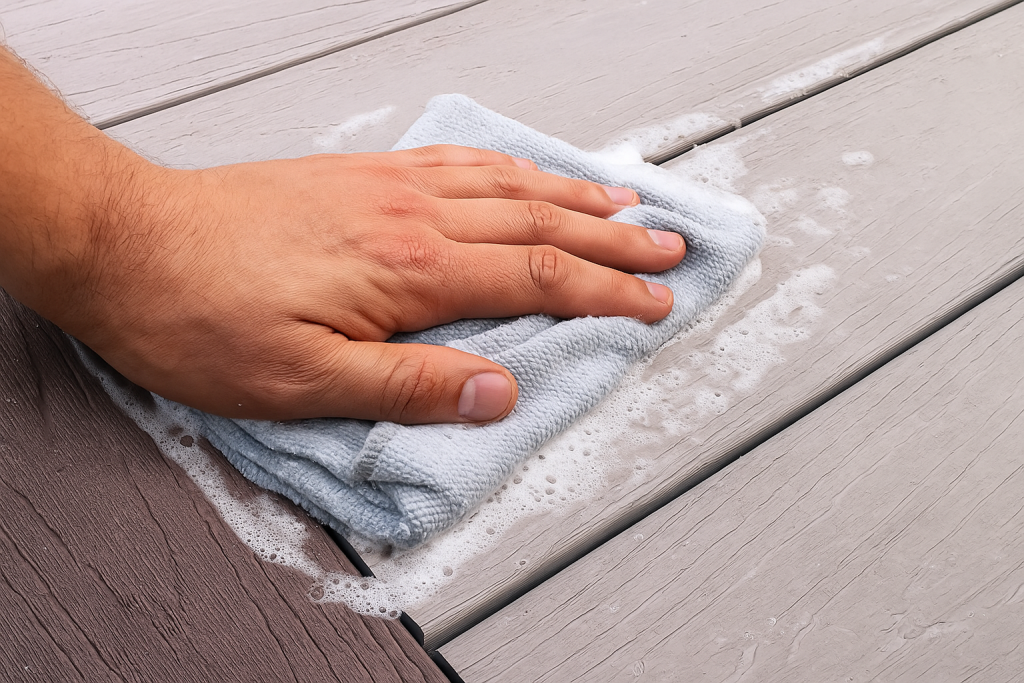
In most cases, warm water, a mild dish soap, and a soft bristle brush are all you need. Give the boards a good scrub and rinse everything down with a hose. Doing this a couple times a year is usually enough to keep your deck looking fresh.
For tougher spots like grease from the grill or built up grime, a non abrasive household cleaner can help break things down. Just make sure to test it in a small area first and avoid anything too aggressive that could damage the surface.
What about pressure washing?
This is one of the most common questions every spring. Yes, you can pressure wash composite decking and PVC decking, but it needs to be done carefully.
If you decide to use one, keep the pressure under 1100 PSI, stay at least 10 inches away from the surface, and use a fan tip nozzle. It is also important to wash in the direction of the grain to avoid marking the boards.
For many homeowners and even contractors, sticking with soap and water is still the safest and easiest option.
Small habits make a big difference
Once your deck is clean, a few simple habits can help keep it that way throughout the season.
Cleaning up spills right away helps prevent stains from setting in. Avoid spraying things like sunscreen or insect repellent directly onto the boards and be mindful of what sits on the surface for long periods of time.
If you have PVC decking, it is especially important to avoid placing rubber or vinyl items directly on the boards, as they can cause discolouration. Using proper mats for grills or furniture also helps protect the surface and maintain the look of your deck.
Dealing with moisture and mildew
As spring weather settles in, you may notice some areas where dirt, pollen, and moisture collect. This can sometimes lead to mildew forming on the surface.
Both composite and PVC decking are designed to resist moisture and prevent deeper damage, but surface buildup can still happen if the deck is not cleaned regularly. Keeping the deck dry, clearing debris, and maintaining airflow are the best ways to prevent this from becoming an issue.
PVC decking has an added advantage here since it contains no organic material, making it naturally resistant to mold. Composite decking is also engineered to resist moisture and decay, which is why both are strong long term choices for outdoor spaces.

If winter is not fully gone yet
In many areas, early spring still brings a bit of snow or ice. If you need to remove it, stick to a plastic shovel and avoid metal tools that can scratch the surface.
Shoveling parallel to the boards helps prevent damage, and if ice melt is needed, use calcium chloride or magnesium chloride based products. Just be sure to rinse off any residue once things melt to keep the surface clean.
Getting ready for deck season
Getting your deck ready for spring does not need to be a big project. A quick inspection, a proper clean, and a few preventative steps go a long way in keeping your composite or PVC decking in great shape.
For homeowners, it means less time worrying about maintenance and more time enjoying the space. For contractors, it is a great opportunity to guide clients through simple care practices that help protect their investment long term.
If you want a full breakdown of approved cleaning methods and maintenance tips, you can reference the complete guide here: Care + Maintenance Guide
Order your TruNorth Samples or Find a Retailer and see how our composite and PVC decking keeps your outdoor space beautiful season after season.